Geopolitical Risk in Commodity Markets: A Game Theory Approach to Power & Profit
Geopolitical Risk in Commodity Markets: A Game Theory Approach to Power and Profit
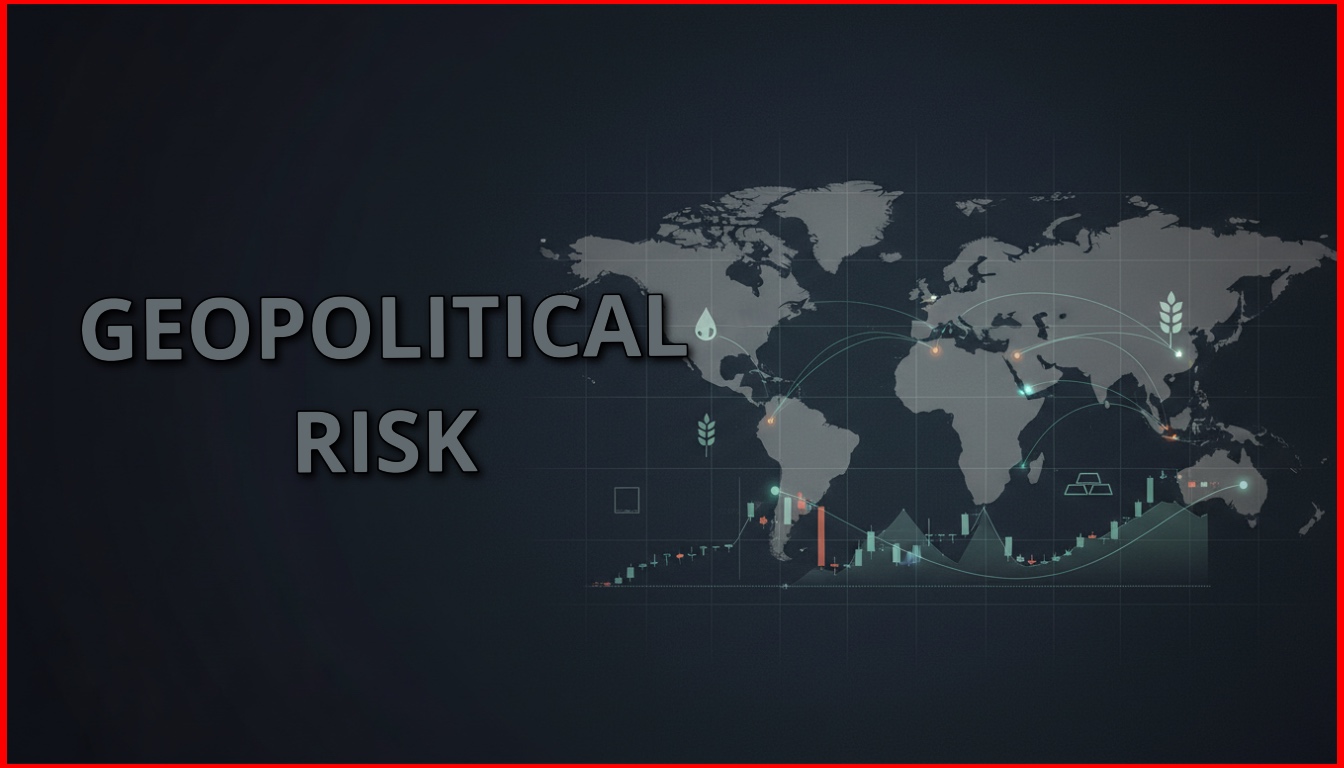
When Russia's invasion of Ukraine sent natural gas prices soaring 700% in Europe, most investors scrambled in panic.
But a select few saw it coming—not through crystal balls, but by understanding the strategic game being played. They recognized that commodity markets aren't driven by random chaos; they're chessboards where nations, corporations, and investors make calculated moves for power and profit.
Most investors treat geopolitical risk as unpredictable noise, something to fear and avoid. This is a costly mistake. The truth is that geopolitical commodity markets operate according to game theory principles and power dynamics that can be decoded, analyzed, and exploited. When you understand the strategic games nations play over resources, you transform from a reactive pawn into a proactive player—a Financial Architect who profits from disruption rather than suffers from it.
The Resource Game: Nations as Strategic Players
Understanding the Players and Their Incentives
Commodity markets are multi-player games where nations compete, cooperate, and conflict over finite resources. Each player has distinct strategic objectives:
Producer nations like Saudi Arabia, Russia, and Venezuela leverage their resource wealth as both economic engine and geopolitical weapon. Their goal isn't just profit—it's power projection, a dynamic we also see in strategic competition in global finance. Control over oil, gas, or rare earth minerals gives them leverage over consumer nations and influence in international affairs.
Consumer nations like the United States, European Union, and China face a different challenge: resource dependency creates vulnerability. Their strategic imperative is energy security—diversifying suppliers, building strategic reserves, and developing alternatives to reduce dependence on potentially hostile producers.
Corporate players—energy majors, mining companies, and commodity traders—are caught in the middle, navigating between profit maximization and geopolitical constraints. They must read the game correctly or risk having assets nationalized, contracts voided, or operations disrupted.
This is a multi-player non-cooperative game with shifting alliances. Yesterday's partner becomes today's adversary. The rules change mid-game. And the stakes are measured in trillions of dollars and national security.
The Power of Supply Control
Resource nationalism is the ultimate expression of the 48th Law of Power: "Make others depend on you." When a nation controls a critical resource, it holds power over those who need it. This power manifests in several ways:
Strategic stockpiling allows consumer nations to weather short-term disruptions. The U.S. Strategic Petroleum Reserve, for example, can release up to 4.4 million barrels per day—a powerful tool to stabilize markets during crises.
Infrastructure control creates chokepoints that amplify power. Russia's control over pipelines to Europe gave it leverage for decades. China's dominance in rare earth processing gives it control over supply chains for everything from smartphones to fighter jets.
Production quotas allow producer cartels like OPEC to manipulate supply and maintain price floors. This is supply control weaponized for economic and political gain.
Game Theory Models in Commodity Markets
OPEC as a Cooperative Game
OPEC operates as a classic cooperative game—similar to the strategic dynamics we see in activist investing strategies—but one constantly threatened by defection. Member nations agree to production quotas to maintain higher prices. The collective benefit is clear: restricted supply means higher revenues for all.
But here's the game theory problem: each member has an incentive to cheat. If Saudi Arabia sticks to its quota while others overproduce, the Saudis lose market share while prices still fall. This is the Prisoner's Dilemma in action.
The Nash Equilibrium in oil production occurs when no country can improve its position by unilaterally changing its strategy. OPEC tries to enforce this equilibrium through monitoring, peer pressure, and the threat of price wars. When cooperation breaks down—as it did in 2014 and 2020—prices collapse, punishing defectors and reinforcing the value of cooperation.
Trade Wars as Sequential Games
Trade wars are sequential games where timing and credibility matter enormously. When the U.S. imposed tariffs on Chinese goods, including commodities, it wasn't just about economics—it was a strategic move in a larger game.
The first-mover advantage in trade policy is real. The country that acts first can shape the battlefield, forcing the opponent to react on unfavorable terms. But retaliation is inevitable, leading to tit-for-tat escalation.
The key to winning sequential games is making credible threats. If your opponent believes you'll follow through, they may back down without you having to act. If they doubt your resolve, they'll call your bluff. This is why trade wars often escalate beyond what's economically rational—backing down signals weakness in future games.
The Sanctions Game
Economic sanctions are power projection through market exclusion. When Western nations sanctioned Russian energy exports, they weren't just punishing Russia—they were reshaping global commodity flows.
But sanctions create unintended consequences and arbitrage opportunities. Russian oil didn't disappear; it found new buyers in India and China at discounted prices. These countries then reduced their purchases from other suppliers, freeing up supply for Europe. The commodity still flowed, just through different channels—a market adaptation similar to the algorithmic power dynamics that reshape trading flows in modern markets.
Smart investors recognize that sanctions create market inefficiencies—and inefficiencies create profit opportunities. The key is understanding the secondary effects: Who benefits from rerouted supply chains? Which infrastructure becomes more valuable? What substitutes gain market share?
Investment Strategies for the Geopolitical Chessboard
Hedging Geopolitical Risk
Diversification is your first line of defense. Don't concentrate exposure in a single commodity or region. Spread investments across:
- Commodity types: Energy, metals, agriculture - Geographic regions: Avoid overexposure to geopolitically unstable areas - Supply chain positions: Producers, processors, transporters, consumers
Options and futures provide tactical hedging tools. A long position in oil futures protects against supply disruptions. Put options on commodity-dependent stocks limit downside during crises. The cost of these hedges is insurance against geopolitical shocks.
Correlation analysis during crisis periods reveals which assets move together under stress. Gold and oil often spike simultaneously during Middle East conflicts. Understanding these correlations helps you position portfolios for different geopolitical scenarios.
Identifying Opportunity in Disruption
Disruption creates winners and losers. Your job is to identify the winners before the market fully prices them in.
When sanctions hit a major supplier, alternative suppliers benefit from higher prices and increased market share. When Russia faced sanctions, U.S. LNG exporters and Middle Eastern producers gained.
Substitution plays emerge when one commodity becomes scarce or expensive. High natural gas prices drive demand for coal and renewables. Rare earth shortages accelerate development of alternative materials.
Infrastructure and logistics winners profit from rerouted supply chains. When Russian pipelines to Europe closed, LNG tanker rates soared. When trade routes shift, new ports and transportation hubs gain strategic value.
Timing matters. Enter positions as geopolitical tensions rise but before disruption occurs. Exit as markets stabilize and premiums compress.
Reading the Signals
Build a framework to monitor geopolitical commodity risk, applying the same game theory approach to financial planning that transforms reactive investors into strategic players:
Leading indicators include diplomatic tensions, military buildups, election cycles in key producer nations, and changes in strategic reserve policies. These signal potential disruptions before they occur.
Policy shifts in major economies often telegraph future commodity demand. China's infrastructure spending drives metal prices. Europe's energy transition policies reshape fossil fuel markets.
Supply chain vulnerability analysis identifies which commodities face the highest geopolitical risk. Ask: How concentrated is production? How easily can supply be disrupted? How quickly can alternatives scale?
The investors who profit from geopolitical commodity risk aren't lucky—they're prepared. They've built frameworks to analyze the game, positioned portfolios for multiple scenarios, and developed the discipline to act when others panic.
The Dispatch Verdict: From Pawn to Player
Geopolitical commodity markets are not random chaos—they're strategic games played by nations, corporations, and investors. The rules are drawn from game theory: cooperation and defection, sequential moves and credible threats, Nash Equilibria and Prisoner's Dilemmas. The dynamics are governed by power: resource control, infrastructure dominance, and strategic dependency.
Understanding these frameworks transforms geopolitical risk from something to fear into something to exploit. You stop reacting to headlines and start anticipating moves. You recognize that every disruption creates winners, and you position yourself to be among them.
The resource game is being played whether you understand it or not. The question is: Are you a pawn being moved by forces you don't comprehend, or a player making strategic moves on the geopolitical chessboard?
Build your framework. Monitor the signals. Position your portfolio. And transform geopolitical risk into geopolitical opportunity.
The game is on. Make your move.



Comments
Post a Comment